Floating Golf Course at Coeur d'Alene Resort

The Coeur d'Alene Resort is a luxury resort hotel in Coeur d’Alene, Idaho, U.S. Located on the north shore of Lake Coeur d'Alene, the Coeur d Alene Resort is best known for its astounding 18-hole golf course, a part of which is perched on a movable artificial island is the middle of a lake.
Coeur d’Alene’s celebrated 14th hole is located on a boat and it moves around Lake Coeur d’Alene, never to stay in one place for more that a day. Built on a barge on submerged tracks, the green is moved daily by computer. Hitting the turf is difficult since the distance keeps varying. Water taxis transport golfers to and from the hole.
The golf course and the floating green were designed by Scott Miller, and the course opened for play in 1991. It has since been ranked among the best resort golf courses in the United States by Golf Digest, Golf Magazine and others.
floating-green-1
floating-green-3
floating-green-4
floating-green-5
floating-green-6

Hydrospeeding on The Aletsch Glacier

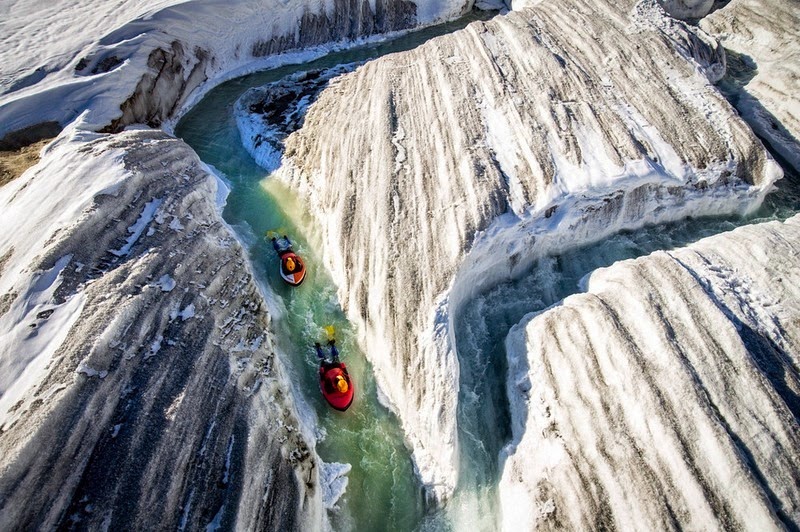
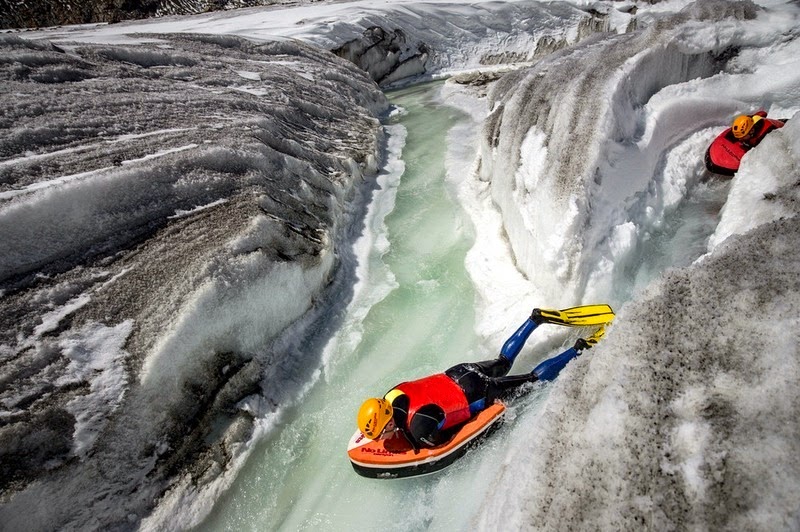
Hydrospeeding or riverboarding is a form of extreme sports where participants lie prone on rigid foam boards and ride the rapids. Riverboarding is usually done in rivers and streams, but some enthusiasts have taken to the freezing waters of glacier runoffs. “There are two major dangers when sliding head first through glacial runoff,” warns adventure magazine Outside. “First, the water you are rushing down eventually flows into a deep crevasse. Second, glacial lakes that feed the runoff often overflow during the midday heat, which causes a flood of large ice and debris to crash down the channels.” Despite the obvious risks, the sport of hydrospeeding is emerging as a new summertime hobby.
French mountain athlete and hydrospeeder Claude-Alain Gailland and canyon activity specialist, Gilles Janin, decided to body board down Europe’s longest glacier. On the Aletsch glacier in Switzerland, the duo completed a winding seven mile journey starting at the top of the glacier and ultimately paddling out of the bay in a kayak. The daredevils risked not only being carried away by strong currents and drowning in hidden crevices, but also being overwhelmed by collapsing glacial lakes that could be released into the river at any moment. These incredible images were captured by mountaineering photographer, David Carlier.
hydrospeeding-11
hydrospeeding-10
hydrospeeding-9
hydrospeeding-8
hydrospeeding-7
hydrospeeding-6
hydrospeeding-5
hydrospeeding-4
hydrospeeding-3
hydrospeeding-2
hydrospeeding-1

via AvaxNews

Hell’s Revenge and The Lion's Back

Located in the heart of the Colorado Plateau, in Utah, in the western United States, between scenic red rock cliffs of Arches National Park and the incredible sandstone landscapes of Canyonlands National Park, the town of Moab offers endless opportunity for sightseeing and exploration. This is why this small town is a popular destination for adventure lovers. The rugged and beautiful desert terrain is marked with hundreds of trails for mountain biking and extreme 4x4 driving.
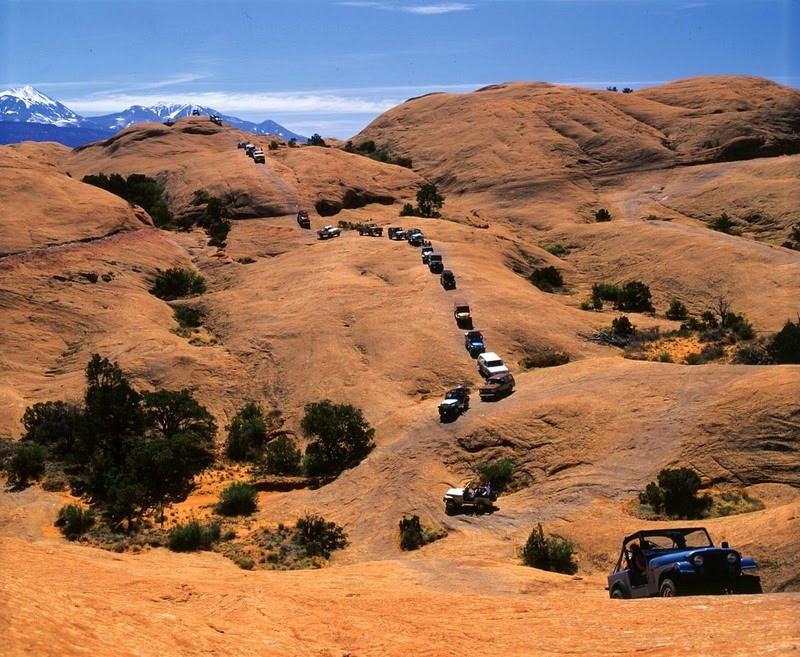
One particularly difficult trail, appropriately named Hell’s Revenge, consists of an 8.4 mile roller coaster ride across dangerously steep sandstone domes and ledges that are not for the faint of heart. It’s a challenging and difficult trail, recommended only for very experienced drivers with advanced equipment. As challenging as it is, Hell’s Revenge is also a very beautiful trail that takes you to high vantage points offering great views of the La Sal Mountains, Negro Bill Canyon, Abyss Canyon and the Colorado River. This area is also known for another famous motorcycle and mountain-bicycle trail called "Slickrock Bike Trail," east of the town of Moab.
lions-back-moab-7
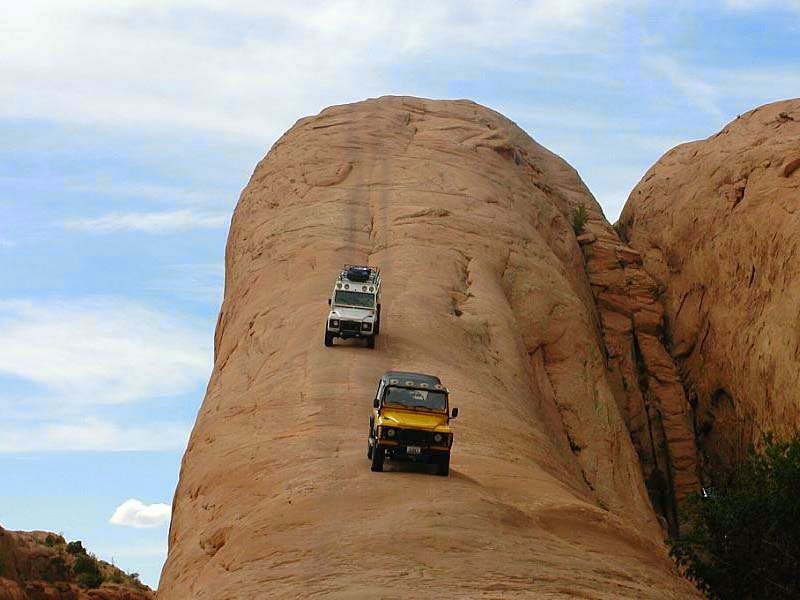
Riding down the Lion’s Back, in Moab, Utah. Photo credit
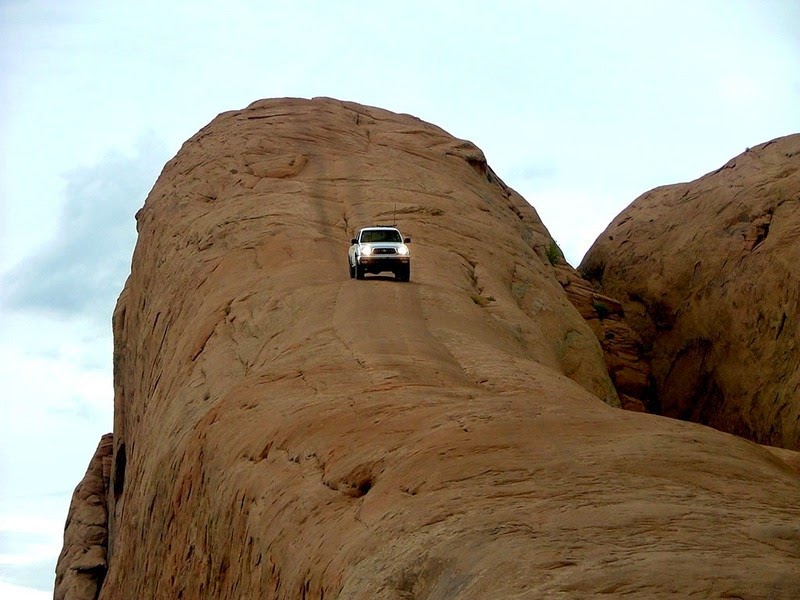
Hell’s Revenge includes several obstacles named such as “Escalator”, “Black Hole” and the “Tip Over Challenge”. One popular obstacle that you will find along the way is “The Lion's Back”.
The Lion's Back is a sandstone ridge several hundred feet up. The climb involves riding up the slope having a gradient of up to 65 degrees in places, reach the top, make a turn and slowly descend down. Lion’s Back became famous years ago when a vehicle, lost its brakes and rolled down the hill, plunging 30 feet to the ground. Nobody died in the crash, but the event was caught on video tape and was shown on several television programs. The attraction and campground is now private property and no longer accessible by 4x4'ers.
Every year during Easter, hundreds of 4-wheelers come to challenge the rough terrain of the backcountry during Easter Jeep Safari, an event which runs for nine days, going through Easter Sunday.
lions-back-moab-6
The Lions’ Back. Photo credit
lions-back-moab-5
lions-back-moab-4
lions-back-moab-3
lions-back-moab-1
hells-revenge-moab-11
Wheeling enthusiasts enjoy the Hell's Revenge Trail during Moab's Annual Easter Jeep Safari. Photo credit
hells-revenge-moab-2
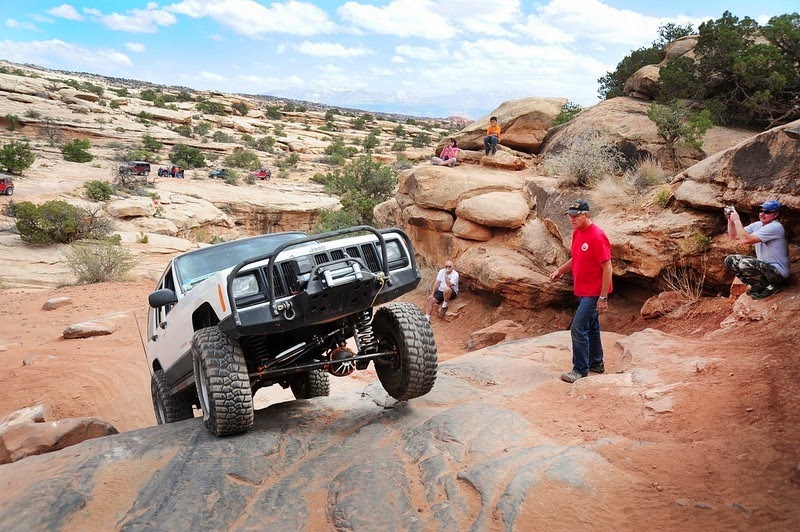
A Jeep Cherokee climbs effortlessly up a steep rock wall along the Gold Bar Rim trail during Moab Easter Jeep Safari. Photo credit
hells-revenge-moab-3
A group of 4x4s ride along a steep dropoff on the Flat Iron Mesa ride at the Easter Jeep Safari in Moab. Photo credit
hells-revenge-moab-6
The Escalator obstacle on the Hell’s Revenge trail in Moab. Photo credit
hells-revenge-moab-5
The Escalator obstacle on the Hell’s Revenge trail in Moab. Photo credit
hells-revenge-moab-8
Crawling up a rock on Hell's Revenge. Photo credit
hells-revenge-moab-9
The Mickey's Hot Tub on Hell's Revenge trail. Photo credit
hells-revenge-moab-4
Attempting to crawl out of Mickey's Hot Tub on Hell's Revenge trail. Photo credit
hells-revenge-moab-10
A Toyota coming up out of Hell's Gate, on Hell's Revenge trail. Photo credit
hells-revenge-moab-12

The Camouflaged Military Bunkers of Switzerland

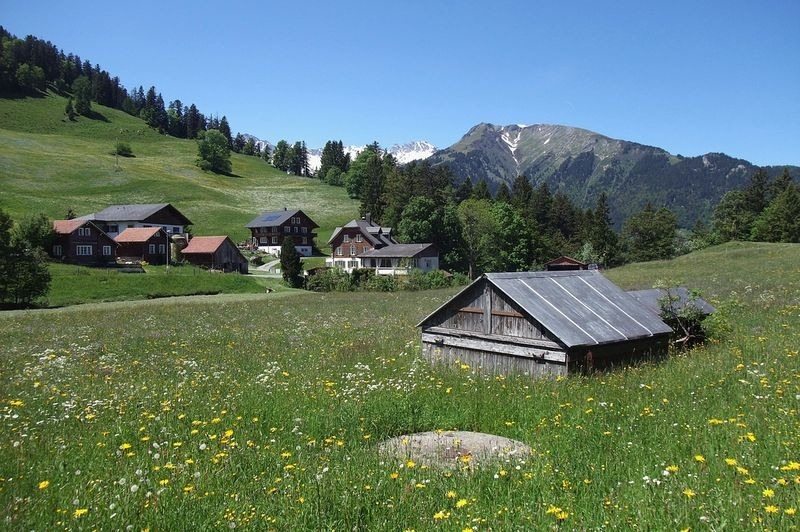
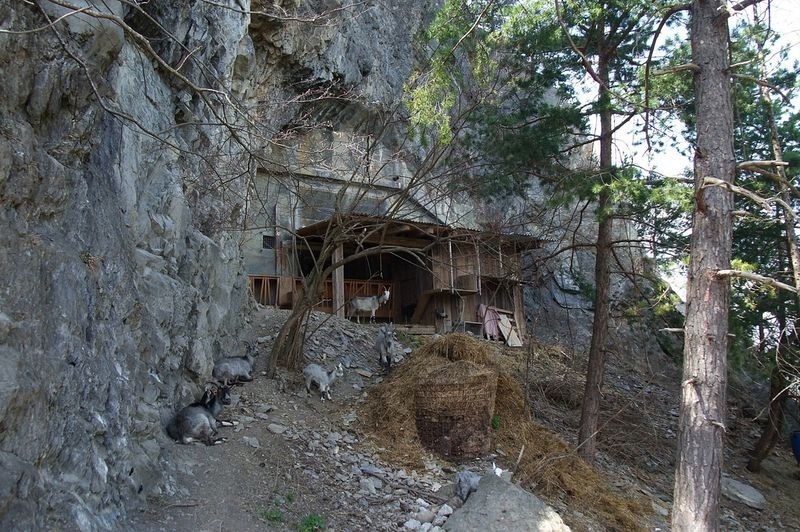
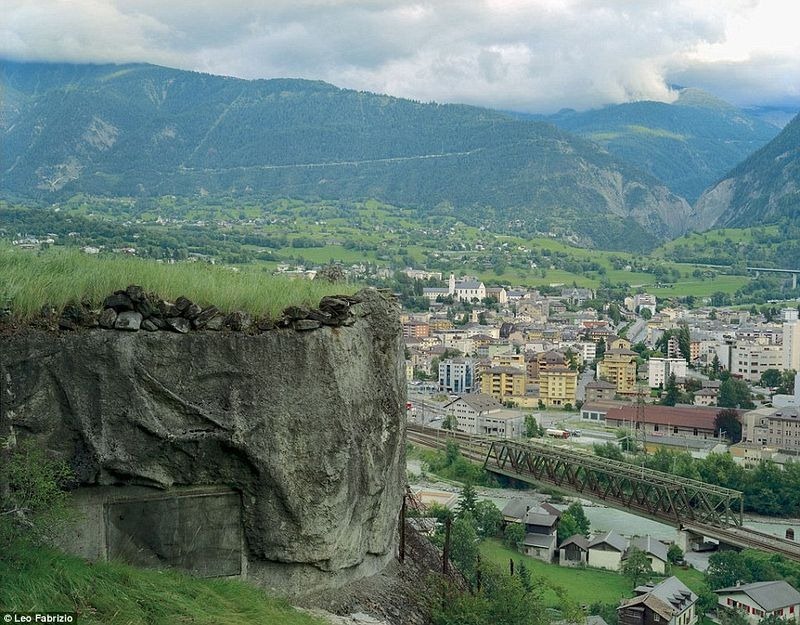
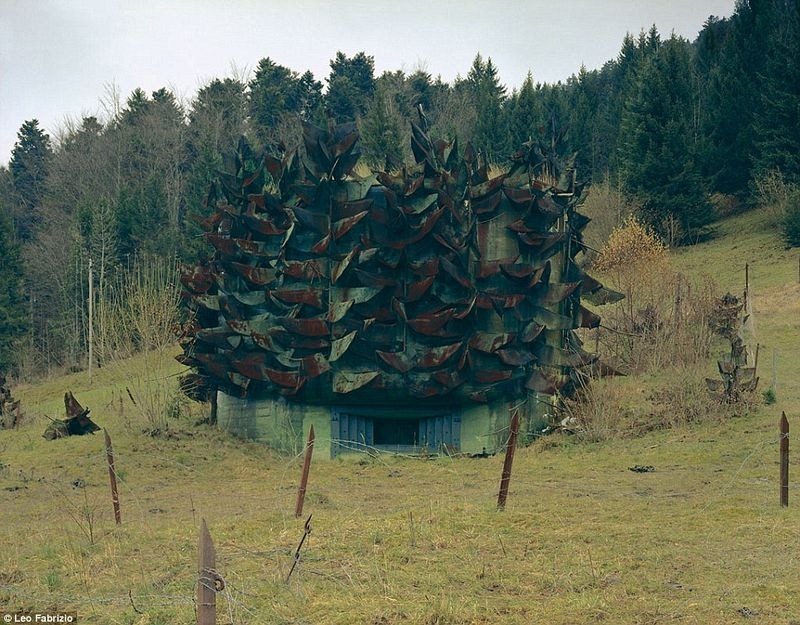
Switzerland is a politically neutral country, yet it has a strong military. All across the Swiss alps are military installation and bunkers carefully hidden so as to blend into the surrounding landscape. Some of them are camouflaged as huge rocks, others as quiet villas or barns that could open up in the event of an emergency to reveal cannons and heavy machine guns that could blow any approaching army to smithereens. Enormous caverns are dugout on the mountain side to function as ad-hoc airbases with hangars. Every major bridge, tunnel, road and railway has been rigged so they could be deliberately collapsed, whenever required, to keep enemy armies out. Highways can be converted into runways by quickly removing the grade separations in between the lanes.
hidden-swiss-bunkers-17
Is that a rock? Photo credit
The country has nuclear fallout shelters in every home, institutions and hospitals, as well as nearly 300,000 bunkers and 5,100 public shelters that could accommodate the entire Swiss population if required. Switzerland also has one of the largest armies on a per capita basis, with 200,000 active personnel and 3.6 million available for service. Every male citizen under 34 years old (under 50 in some cases) is a reserve soldier. Soldiers are even allowed to take all personally assigned weapons to home. If anyone were to invade Switzerland, they would find a nation armed to the teeth.
In his 1984 book, La Place de la Concorde Suisse, acclaimed New Yorker author John McPhee quoted a Swiss officer as saying: "Switzerland doesn't have an army, Switzerland is an army." Indeed, Switzerland’s powerful citizen army has helped preserve the country’s neutrality and keep neighboring countries from invading Swiss territory. The country hasn't been involved in any military conflict for 200 years.
hidden-swiss-bunkers-12
A bunker disguised as a house. Photo credit
Fortification of the Swiss alpine region began in the 1880s. They were intensified and modernized during the World War and again during the Cold War period. But today, as a neutral country with no immediate threats to its borders, most of the bunkers lie empty and many are falling into disrepair. Some have been converted into shelters for homeless people, others house things like museums and hotels.
The Swiss government considered closing them down but the cost of decommissioning — an estimated $1 billion — far surpasses what it takes annually to maintain them. While the matter is still debated, the bunkers are likely to stay because they still provide use as fallout shelters. "Neutrality is no guarantee against radioactivity," they say. In 1978, a law was passed requiring all new buildings to incorporate a shelter. If a family decides against building a shelter, they must pay for a place in the public shelter. Switzerland is the only country in the world that could provide protection to its entire population of 8 million, and more.
hidden-swiss-bunkers-2
Another bunker disguised as a barn. Photo credit
hidden-swiss-bunkers-5
hidden-swiss-bunkers-19
hidden-swiss-bunkers-3
hidden-swiss-bunkers-4
hidden-swiss-bunkers-6
hidden-swiss-bunkers-7
hidden-swiss-bunkers-8
hidden-swiss-bunkers-9
hidden-swiss-bunkers-10
hidden-swiss-bunkers-11
hidden-swiss-bunkers-14
hidden-swiss-bunkers-15
hidden-swiss-bunkers-16
hidden-swiss-bunkers-18

Sources: MiGFlug / Swissinfo.ch / NY Times / RT.com / The Guardian

Zheng He’s Enormous Treasure Ships

Between 1405 and 1433, during the Ming era, Chinese Admiral Zheng He, who was also the court eunuch, commanded seven expeditionary voyages as far away as East Africa and Middle East. These expeditions, known in Chinese history as the treasure voyages, consisted of hundreds of ships of enormous dimensions carrying a crew as large as 28,000 and great amounts of treasures. The purpose of the voyages were to project Chinese power and wealth to the outside world, as well as to establish imperial control over the maritime trade.
Zheng He dedicated the last 28 years of his life to marine navigation until he died during or shortly after his seventh and final voyage. When Zheng He returned, China had a new emperor who was uninterested in the continuation of such government-sponsored naval adventures. The Treasure Shipyard in Nanjing, where Zheng He’s massive fleet was built was shut down, abandoned and subsequently lost to history.
nanjing-treasure-ship-5
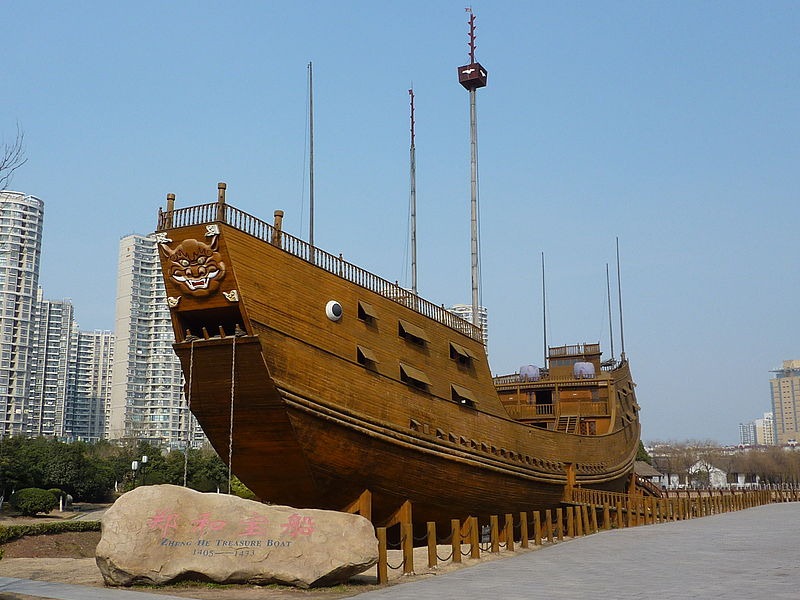
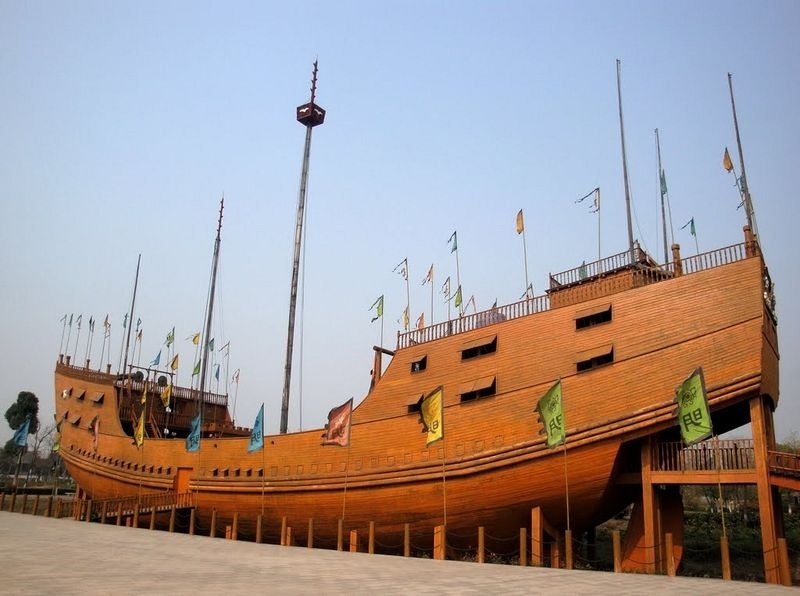
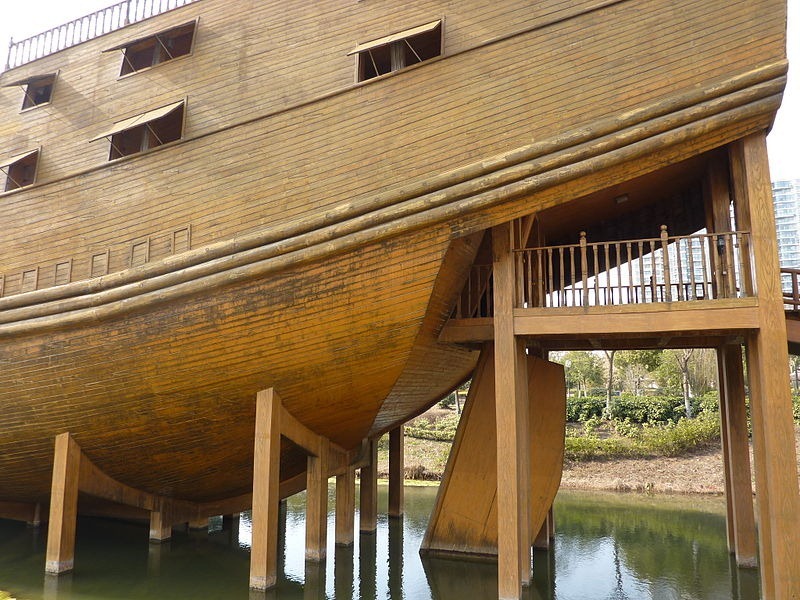
A full-size model of a "middle-sized treasure boat" (63.25 m long) of the Zheng He fleet at the Treasure Boat Shipyard site in Nanjing. Build ca. 2005 from concrete, lined with wooden planks. Photo credit
If recorded accounts are taken as factual, Zheng He's treasure ships were mammoth in size with nine masts and four decks, capable of accommodating more than 500 passengers, as well as a massive amount of cargo. Some of the ships were said to have been 137 meters (450 feet) long and 55 meters (180 feet) wide, which was at least twice as long as the largest European ships of that time. Some sources claim the ships were even longer — 180 meters (600 feet).
Modern scholars argue that Zheng He's ships couldn’t have been that long because wooden ships of such extreme sizes would have pushed the limits of what was possible in wooden ship construction making them unwieldy. There are evidences in later historical periods when ships longer than 100 meters were built, such as HMS Orlando and the schooner Wyoming, and they suffered structural problems. In heavy seas, the ships flexed causing the long planks to twist and buckle. The first ships to attain 126 meters length were 19th century steamers with iron hulls.
Zheng-He-voyage
The route of the voyages of Zheng He's fleet.
However, scholars agree that the treasure ships were considerably large, some estimating the largest ones to be between 119–124 meters (390–408 feet) in length, while more conservative estimates puts them at about 60–76 meters (200–250 feet).
Compared with other ships, treasure ships were wide in ratio to their length which helped them achieve stability. The hull was V-shaped, the keel long and the ballast heavy. Treasure ships also used floating anchors cast off the sides of the ship in order to increase stability. Watertight compartments were also used to add strength to the treasure ships. The ships also had a balanced rudder which could be raised and lowered, creating additional stability like an extra keel.
In 2005, a Treasure Shipyard park was created in the heart of Nanjing, where several scaled-down replicas of treasures ships are to be found including a full-sized model of one of Zheng He’s smaller vessels.
nanjing-treasure-ship-11
nanjing-treasure-ship-12

nanjing-treasure-ship-2
nanjing-treasure-ship-3
nanjing-treasure-ship-10
On the deck of the model Treasure Ship at Nanjing Treasure Boat Shipyard. Photo credit
nanjing-treasure-ship-6
Inside the stern superstructure of the model Treasure Ship at Nanjing Treasure Boat Shipyard. Photo credit
nanjing-treasure-ship-8
Inside the model Treasure Ship at Nanjing Treasure Boat Shipyard. Photo credit